|
The Chanute biplane glider is a beautiful and simple aircraft. It set a trend in
the structural design of biplanes that was followed and improved on for many years
after it first flew. Compared to other flying machines at the time, it was in my
opinion a masterpiece.
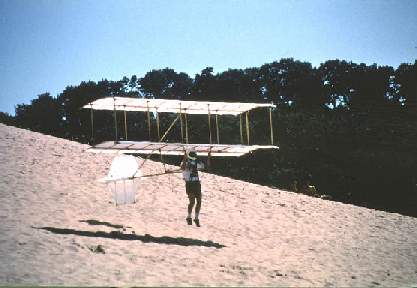
Three early gliding pioneers died in glider crashes (Otto Lilienthal, Percy Pilcher,
and John Montgomery). The Chanute biplane had hundreds of safe flights with no fatalities.
William Avery did injure himself while being towed aloft at the 1904 World's Fair
in St. Louis, so it did not have a perfect record either.
Hang gliding is a risky sport, and any person interested in flying one should wisely
invest in proper training from an experienced, established United States Hang Gliding
Assn. (USHGA) certified instructor on appropriate training equipment. The Chanute
glider is not safe for training, and is in every way inferior to 1990's equipment
(performance, setup time, safety, handling qualities, cost).
I built and flew my replica for several reason. First, to recreate history on the
100 year anniversary to honor our early aviation pioneers. Second, to learn about
other aspects of aircraft design than my chosen field. Third, to experience a different
aspect of hang gliding. It was really fun! My respect for Chanute, Herring, and
Avery increased greatly.
Here is a summary of the glider's characteristics:
- Wingspan = 16 ft.
- Wing area = 154 square feet
- Empty weight = 54 lb
- Materials = Aircraft quality Sitka spruce, ash, aircraft hardware, Stits PolyFiber
- Stall speed = 24 mph (estimated)
- Estimated glide ratio = 5 (out of ground effect)
- Flight duration = 3-5 seconds each on two flights (all in ground effect)
- Fuel required = several cool drinks
- Flight length = 150-200 feet (estimated)
- Static load tested load factor = over 2 g's
- Static longitudinal stability = solid and stable
- Lateral/directional stability = skittish
- Time needed to build = 10 months
- Hours needed to build = 150 hours research and engineering, 325 hours to build
- Cost = enough to have bought a nice used hang glider
|